
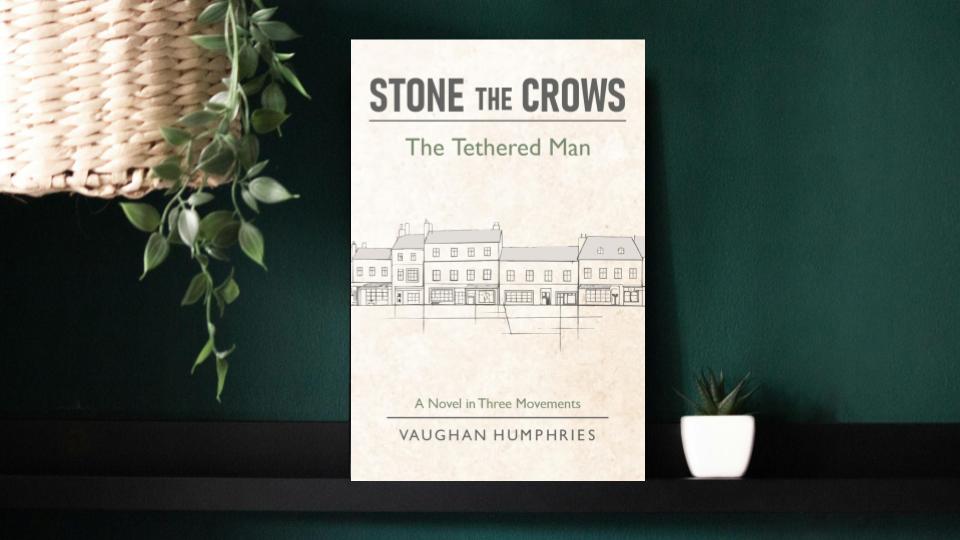
Most horror stories rely on monsters hiding in the dark, but Vaughan Humphries’ “Stone the Crows: The Tethered Man” uncovers a far more realistic terror hidden within the fluorescent glow of middle management and polite civil service. Introducing the first movement of the A Man in Flight series, this novella pulls off a daring act of defiance against a genre typically obsessed with high stakes and rapid-fire climaxes, trading explosive theatrics for a chillingly mundane reality where the true danger lies in the things left unsaid. It reframes the very concept of threat, suggesting that the most dangerous presence in a corrupt system is not a criminal mastermind, but the quietly reliable person who simply wants to avoid making a scene. By labeling this opening installment a “movement” rather than a traditional first chapter, Humphries signals a musical approach to pacing, opting to compose a slow symphony of institutional inertia rather than rushing toward a conventional narrative crescendo.
At the heart of this creeping dread is Tom Harding, an intentionally unextraordinary man who represents a highly specific, deeply modern archetype: the employee of least resistance. His personal life is already thinned out, marked by a strained relationship stretched across hemispheres that mirrors his lack of emotional grounding, making him the perfect blank canvas for a predatory institution to write its own agenda onto. The story masterfully contrasts the vast, procedural grey of London, a chaotic world where Tom is merely invisible, with the tightly organized silences of Thame, the deceptive market town where he accepts a vaguely defined government outreach role. Believing he is stepping into a position of passive observation, Tom quickly learns that Humphries has subverted the trope of the active investigator; he is not there to uncover secrets, but rather to be absorbed by them.
Thame itself becomes the central, suffocating character of the piece, functioning as a hyper-organized trap disguised by aggressive politeness. It is a perfectly functioning machinery of polite evasions and civic committees that speak in a dialect of careful omissions. The setting evokes a distinct sense of bureaucratic folk-horror, reminiscent of Kafka’s modern nightmares or Shirley Jackson’s unsettling small-town insularity, but anchored in the recognizable, dreary British imagery of damp commuter trains and rented rooms above shops.
Humphries’ prose is sharp, economical, and laced with a dry, darkly comic wit that perfectly captures the absurdity of institutions that refuse to declare their true purpose. Yet, this narrative execution is bound to polarize, as it plays a dangerous game with the reader’s patience. Because the story relies entirely on atmosphere, it deliberately lacks the cathartic payoffs that most readers look for in fiction. As the tagline itself warns, “nothing explodes, nothing confesses,” meaning the narrative tension is built entirely on the dread of the everyday. The idea that being a helpful, unremarkable person can slowly convert you into a cog in an incomprehensible machine is a brilliant piece of social commentary. Ultimately, “Stone the Crows” is an acquired taste, a beautifully crafted slice of existential dread that will leave fans of slow-burn psychological mysteries delighted by its precision, even if it leaves mainstream thriller fans feeling entirely shortchanged by its refusal to provide a neat resolution.