
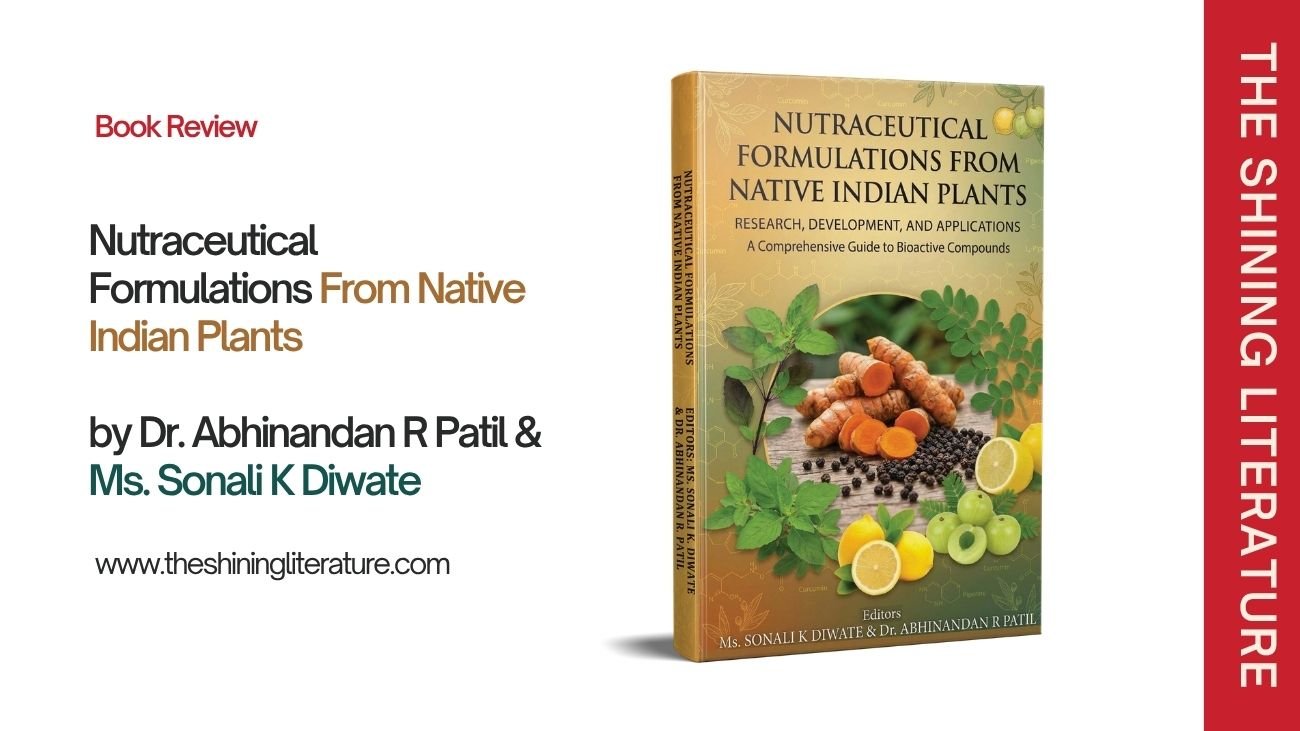
Nutraceutical Formulations From Native Indian Plants: Bridging Traditional Knowledge and Modern Science
India possesses one of the world’s richest traditions of medicinal plant knowledge. For centuries, native Indian plants have played an important role in Ayurveda, Siddha, Unani, and other traditional healthcare systems. Today, researchers are increasingly exploring how this botanical heritage can contribute to modern nutraceutical science.
Nutraceutical Formulations From Native Indian Plants by Ms. Sonali K. Diwate and Dr. Abhinandan R. Patil presents a scientific exploration of native Indian plants and their potential applications in nutraceutical formulation. The book connects traditional knowledge with phytochemical research, pharmacological evidence, formulation science, and contemporary approaches to health and wellness.
Understanding Nutraceutical Formulations From Native Indian Plants
Nutraceuticals occupy an important space between nutrition and pharmaceutical science. They may include plant extracts, phytochemicals, functional ingredients, and naturally derived compounds investigated for their potential role in supporting health and wellness.
India provides a particularly significant environment for this field because of its extraordinary botanical diversity and long history of medicinal plant use. Thousands of plant species have been documented across traditional Indian systems of medicine.
However, transforming traditional knowledge into scientifically developed nutraceutical formulations requires careful investigation. Researchers must consider phytochemical composition, biological activity, extraction techniques, formulation stability, quality assurance, safety, and appropriate standardization.
Connecting Traditional Knowledge With Scientific Research
One of the central themes of the book is the relationship between India’s traditional botanical knowledge and contemporary scientific investigation.
Traditional use can provide researchers with valuable starting points for identifying plants of potential interest. Modern analytical and pharmacological methods can then be used to investigate their chemical constituents, biological properties, and possible nutraceutical applications.
This combination of historical knowledge and modern research creates opportunities for the development of evidence-based plant formulations while encouraging responsible and scientifically rigorous study.
Exploring Antidiabetic Plants and Nutraceutical Research
Diabetes and metabolic disorders represent important areas of contemporary healthcare research. Consequently, medicinal plants traditionally associated with metabolic health have attracted considerable scientific attention.
The book explores antidiabetic plants from the perspective of nutraceutical science, examining their traditional significance alongside phytochemical and pharmacological research.
From Plant Compounds to Practical Formulations
Identifying a potentially useful botanical ingredient is only one stage of nutraceutical development. Researchers must also understand how active compounds can be extracted, standardized, formulated, evaluated, and incorporated into practical dosage forms.
By connecting botanical research with formulation considerations, the book helps readers understand the journey from medicinal plant knowledge to scientifically investigated nutraceutical products.
Himalayan Medicinal Plants and Their Nutraceutical Potential
The Himalayan region is home to remarkable botanical diversity. Its distinctive geography, climate, altitude, and environmental conditions support numerous plant species that have attracted attention for their phytochemical characteristics.
Nutraceutical Formulations From Native Indian Plants examines this botanical richness and considers how Himalayan plants can contribute to nutraceutical research.
Investigating Unique Plant Metabolites
Environmental conditions can influence the production of secondary metabolites in plants. These compounds are particularly important to researchers investigating antioxidant, anti-inflammatory, metabolic, and other biological properties.
Studying Himalayan plants therefore offers opportunities not only for nutraceutical research but also for understanding the relationship between environmental conditions and phytochemical composition.
Orchids and Immunomodulatory Research
Orchids are widely appreciated for their beauty, but certain orchid species also have histories of traditional medicinal use. Their potential applications in modern nutraceutical science remain an interesting field for further investigation.
The book explores orchids with particular attention to their phytochemical profiles and reported immunomodulatory properties.
This discussion encourages readers to look beyond commonly studied medicinal plants and consider less explored botanical resources that may offer promising directions for future research.
Holy Basil: Tradition Meets Modern Nutraceutical Science
Holy Basil, commonly known as Tulsi, occupies a distinctive place in Indian culture and traditional medicine. Its long history of use has also made it an important subject of modern scientific investigation.
The book examines Holy Basil by connecting traditional knowledge with contemporary research into its phytochemical constituents and pharmacological properties.
Understanding Traditional Plants Through Modern Evidence
Rather than treating traditional use and laboratory research as separate subjects, the book demonstrates how both can contribute to a broader understanding of medicinal plants.
This approach is particularly valuable for students and researchers seeking to understand how traditional botanical knowledge can be examined through contemporary scientific methods.
Turning Citrus Waste Into Nutraceutical Opportunities
Sustainability is becoming increasingly important in food, pharmaceutical, and nutraceutical industries. Citrus processing generates substantial amounts of peel and other plant material that may contain valuable phytochemicals.
The book examines citrus waste as a potential nutraceutical resource, demonstrating how agricultural and food-processing by-products can be investigated for value-added applications.
Combining Sustainability With Nutraceutical Innovation
Utilizing plant waste can potentially reduce environmental burdens while creating new sources of functional ingredients. This makes citrus waste research relevant to nutraceutical science, sustainable manufacturing, and the circular economy.
The subject demonstrates how modern formulation research can address both health-related and environmental challenges.
Turmeric and Black Pepper: Exploring Botanical Synergy
Among the most recognizable plants in Indian traditional practices are turmeric and black pepper. Both have received substantial scientific attention, particularly because of compounds such as curcumin in turmeric and piperine in black pepper.
The book concludes with a detailed examination of this botanical combination and its significance in nutraceutical formulation research.
The case study provides readers with an opportunity to understand how phytochemistry, pharmacology, formulation science, and ingredient interactions can come together in the development and evaluation of plant-based nutraceutical products.
A Practical Resource for Students, Researchers, and Formulation Scientists
Nutraceutical Formulations From Native Indian Plants is designed for graduate students, pharmaceutical researchers, formulation scientists, academicians, and professionals interested in herbal and nutraceutical research.
Authors Ms. Sonali K. Diwate and Dr. Abhinandan R. Patil bring academic, research, formulation, quality assurance, and pharmaceutical expertise to the subject. Their backgrounds help position the book at the intersection of pharmaceutical education, scientific research, and practical formulation development.
Advancing India’s Botanical Legacy Through Nutraceutical Science
India’s medicinal plant heritage offers enormous opportunities for scientific investigation, but preserving tradition alone is not enough. The future of plant-based nutraceutical development depends on rigorous research, responsible formulation, quality assurance, standardization, sustainability, and evidence-based evaluation.
Nutraceutical Formulations From Native Indian Plants contributes to this evolving field by bringing traditional botanical knowledge and contemporary pharmaceutical science into a common framework. From antidiabetic plants and Himalayan botanicals to orchids, Holy Basil, citrus waste, turmeric, and black pepper, the book provides readers with a focused introduction to the scientific possibilities within India’s botanical resources.
For students, researchers, and professionals interested in herbal nutraceuticals, the volume offers a useful foundation for understanding how India’s native plants can inspire the next generation of nutraceutical research and formulation.