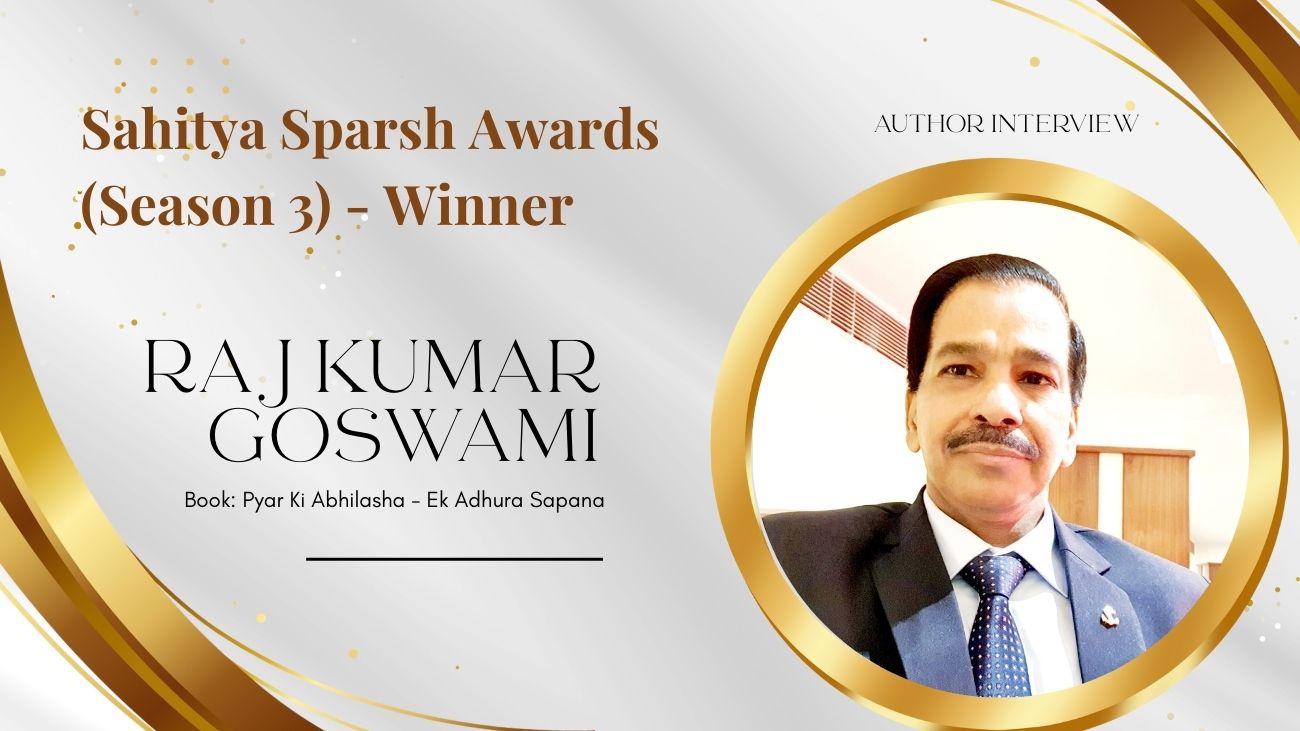
1. Congratulations on the release of your book and on winning the Sahitya Sparsh Awards – Season 3. How does this achievement feel and what does it mean to you as a poet?
Receiving the Sahitya Sparsh Purushkar for Pyaar Ki Abhilasha is a profoundly humbling experience. Poetry, for me, has always been an inward journey rather than a pursuit of recognition. When such an intimate form of expression receives appreciation, it feels like a silent conversation has been heard and understood. This award reassures me that emotions written with sincerity still find space in the hearts of readers. It is not merely a personal milestone but a responsibility, to continue writing with honesty, sensitivity, and emotional integrity. As a poet, this honour strengthens my faith in the power of words to heal, connect, and endure beyond time.
2. Your book Pyaar Ki Abhilasha – Ek Adhura Sapna beautifully captures longing, separation, and emotional depth. What inspired you to write this particular collection?
Pyaar Ki Abhilasha – Ek Adhura Sapna was inspired by the silent realities of love that often remain unfulfilled yet unforgettable. I was drawn to the idea that not all emotions demand closure, some simply wish to be acknowledged. The collection reflects longing, separation, and the quiet strength of acceptance that follows. Many poems emerged from observing people who carry love within them gracefully, without complaint or bitterness. It is a reflection of emotional maturity, where desire transforms into understanding. This book is my attempt to give voice to those incomplete dreams of love that remain alive, tender, and deeply human.
3. You are a technologist by profession and a poet by passion. How do you balance your academic, professional, and creative worlds?
Balancing technology and poetry has never felt conflicting to me. My academic and professional life has instilled discipline, structure, and clarity of thought, while poetry allows emotional release and reflection. The discipline of technology actually creates mental space for creativity. I do not force writing; poetry arrives naturally during moments of silence, early mornings or quiet nights. I believe balance comes from respecting both worlds and allowing each to exist without interference. Technology sharpens the mind, poetry softens the heart. Together, they help me remain grounded, thoughtful, and emotionally aware in both personal and professional spheres.
4. You have authored fifteen books across technology, leadership, and literature. How does your writing process differ when shifting from technical works to emotional poetry?
The shift between technical writing and poetry is a conscious transition from logic to emotion. Technical books demand precision, structure, and objective clarity, every word must inform or instruct. Poetry, on the other hand, thrives on vulnerability, pauses, and emotional truth. When writing poetry, I allow feelings to guide the flow without intellectual interference. I never approach poetry with an agenda, it emerges organically. This contrast keeps my writing alive. One trains the intellect, the other nurtures sensitivity. Moving between the two reminds me that a complete writer must honour both thought and emotion.
5. Your poems often revolve around love, human emotions, and inner reflection. Do these themes arise from personal experiences, observations, or purely creative imagination?
These themes emerge from a blend of personal experience, observation, and imagination. Life offers countless emotional narratives, some lived, some witnessed, and others quietly sensed. I observe how people love, endure separation, and carry unspoken emotions with dignity. At times, imagination fills the emotional gaps that reality leaves behind. I believe poetry does not require literal truth, it requires emotional truth. Whether an emotion is experienced directly or empathically understood, its authenticity matters. My poetry reflects this synthesis, aiming to resonate with readers by touching shared human feelings rather than individual stories alone.
6. The emotional clarity in your poetry makes readers feel deeply connected. What do you believe is the true essence of a powerful poem?
The essence of a powerful poem lies in honesty and restraint. A poem need not be elaborate, it must be sincere. When a poet writes without pretence and allows vulnerability, readers instinctively connect. Emotional clarity comes from writing what one truly feels, not what one wishes to impress. A powerful poem creates silence within the reader, it makes them pause, reflect, or feel understood. If a reader finds their own unspoken emotions mirrored in a poem, the poet has succeeded. Poetry is not about complexity; it is about emotional truth delivered with simplicity and grace.
7. Receiving the Lifetime Achievement Award 2024 is a major milestone. How has your literary journey evolved over the years to reach this stage?
My literary journey has evolved quietly, shaped by consistency rather than ambition. I never set out to chase milestones, I focused on writing honestly and responsibly. Over the years, my writing has matured, from expressing emotions to understanding them deeply. Experience has taught me restraint, empathy, and patience with words. This award represents decades of silent learning, discipline, and respect for literature. It also reflects the trust of readers who have grown alongside my writing. I see this milestone not as an endpoint, but as encouragement to continue contributing meaningfully to literature.
8. Among your popular works like Judai Ki Kashish, Humsafar Ki Yaadein, Anchored in Dreams, and The Shades of Emotional Impression, how does this new book stand apart?
Pyaar Ki Abhilasha stands apart for its emotional stillness. While my earlier works explore longing, companionship, and emotional intensity, this book focuses on acceptance and inner calm. It speaks softly, without dramatization. The poems reflect emotional maturity, where love is understood beyond possession or fulfilment. There is silence, reflection, and dignity in unfulfilled desire. This collection represents a phase where emotions are not questioned but accepted. It is less about yearning and more about understanding love as an enduring presence, even when it remains incomplete.
9. Poetry today is gaining new audiences through digital platforms. What is your perspective on the changing landscape of poetry and reader engagement?
The digital age has expanded poetry’s reach, allowing writers to connect with readers instantly. While brevity dominates online platforms, meaningful poetry still finds its audience. The challenge lies in preserving depth while adapting to changing formats. I believe digital platforms are tools, not threats. They democratize expression and encourage dialogue. However, poets must remain mindful not to dilute emotion for visibility. True poetry transcends medium, it survives because of authenticity. Reader engagement today is more interactive, and this evolving landscape offers poets an opportunity to listen, learn, and grow alongside their readers.
10. Are you active on social media and how can readers connect with you to follow your literary updates and future releases?
I maintain a selective presence on digital and professional platforms where meaningful literary engagement is possible. Rather than frequent posting, I prefer purposeful interaction, sharing updates about books, literary events, and reflections when they add value. Readers can connect with me through author interactions, book launches, literary forums, and professional networks. I believe connection should be thoughtful rather than constant. Literature thrives on depth, not noise. I welcome readers who engage with sincerity and curiosity, and I value the quiet, respectful dialogue that literature naturally encourages.
11. Where can readers purchase your latest book as well as your previous poetry collections?
Pyaar Ki Abhilasha and my earlier poetry collections are available through leading online bookstores such as Amazon, Flipkart, Google Boks etc and select offline retailers, mainly the publishers. Availability details are usually shared during book launches, literary events, and through publishers’ platforms. I encourage readers to explore authorized sources to support ethical publishing practices. For me, each book reaching a reader is more important than the medium through which it travels. What matters is that the words find a home where they are read, felt, and remembered.
12. Thank you for answering our questions. Before we conclude, is there a message you would like to share with your readers and aspiring poets?
To my readers, I offer my heartfelt gratitude, your emotions complete my words. Every poem lives only when it is felt. To aspiring poets, I would say that write honestly, read deeply, and remain patient. Do not rush expression or seek validation prematurely. Poetry is not about recognition, it is about resonance. Let your experiences mature before they become words. If your poem brings comfort, reflection, or understanding to even one reader, your journey as a poet is already meaningful.