
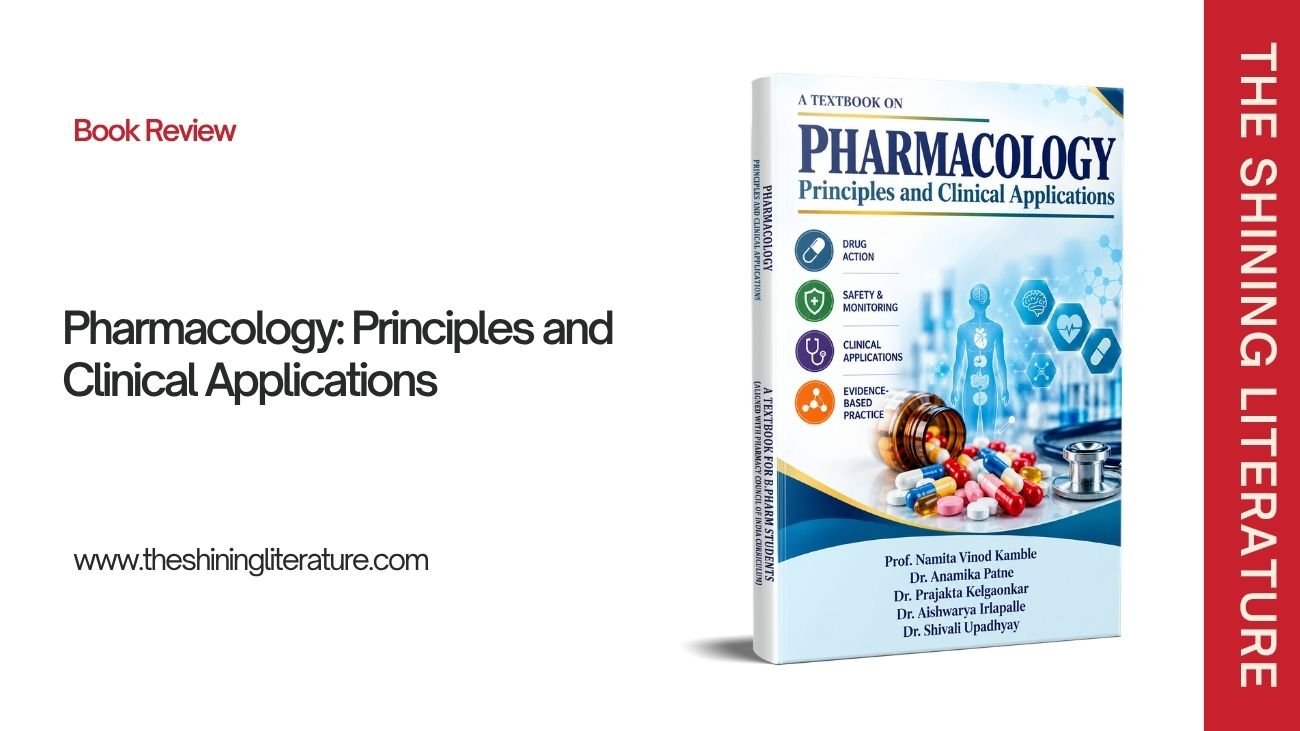
Pharmacology: Principles and Clinical Applications, A Comprehensive Textbook for Pharmacy and Healthcare Students
Understanding how medicines work, interact with the human body, and contribute to patient care is essential for every healthcare professional. Pharmacology: Principles and Clinical Applications, authored by Prof. Namita Vinod Kamble, Dr. Anamika Sudhir Patne, Dr. Prajakta Kelgaonkar, Dr. Aishwarya Irlapalle, and Dr. Shivali Upadhyay, provides a structured approach to learning pharmacological concepts and their practical applications.
Designed to support academic learning and examination preparation, this comprehensive pharmacology textbook combines theoretical knowledge, clinical correlations, comparative explanations, and self-assessment exercises to help students strengthen their understanding of drug therapy.
Understanding the Importance of Pharmacology in Healthcare
Pharmacology is a fundamental subject in pharmacy, medicine, nursing, and allied healthcare education. It explores how drugs produce therapeutic effects, how they interact with biological systems, and how they may cause adverse reactions.
A strong foundation in pharmacology enables students to understand medication selection, therapeutic effectiveness, drug safety, and the scientific principles underlying clinical treatment.
This textbook approaches these concepts systematically, making complex information easier to study, understand, and revise.
Connecting Pharmacological Theory with Clinical Practice
One of the book’s important features is its emphasis on connecting classroom knowledge with realistic clinical situations.
Rather than focusing exclusively on drug classifications and theoretical explanations, the chapters include clinical correlations that demonstrate how pharmacological principles relate to patient care.
This approach encourages students to develop a practical understanding of medication use and its implications in healthcare settings.
A Structured Approach to Learning Pharmacology
The textbook follows a consistent chapter format intended to support both first-time learners and students preparing for university examinations.
Each chapter begins with clearly defined learning objectives, helping readers identify the important concepts they are expected to understand.
The main content is organized into numbered sections based on drug classifications or physiological systems.
Detailed Coverage of Drug Mechanisms and Applications
Each drug group is examined through three essential areas:
- Mechanism of Action: Understanding how medicines produce their pharmacological effects.
- Clinical Uses: Exploring the therapeutic applications of different drug classes.
- Adverse Effects: Recognizing potential unwanted reactions associated with medication use.
This systematic presentation helps students build connections between pharmacological mechanisms and clinical decision-making.
Illustrative figures accompany relevant sections, providing additional support for understanding complex concepts.
Important Features That Support Effective Learning
The textbook incorporates several educational features designed to improve comprehension, knowledge retention, and examination readiness.
Quick Comparison Boxes
Quick Comparison boxes present closely related drug classes side by side.
These comparisons help students identify important similarities and differences, particularly when reviewing drug mechanisms, therapeutic applications, and adverse effects.
Chapter Summaries and Clinical Correlations
Each chapter includes a concise summary highlighting essential pharmacological concepts.
These summaries provide useful revision material for students preparing for examinations.
Clinical Correlations further strengthen understanding by presenting realistic situations in which pharmacological knowledge becomes relevant.
Review Questions for Examination Preparation
The textbook provides multiple formats of assessment questions, including:
- Multiple-choice questions with answer keys
- Short-answer questions
- Long-answer questions
These exercises encourage self-assessment and help students evaluate their understanding of important topics.
The inclusion of different question formats also supports preparation for university examination patterns.
Additional Reference Materials for Students
Beyond the main chapters, four appendices provide supplementary resources for academic study and revision.
These include a glossary of pharmacological terminology, commonly used abbreviations, a quick-reference table of clinically important drug interactions, and a sample model question paper.
The drug interaction reference is particularly useful for introducing students to important considerations in medication safety.
Together, these resources make the textbook suitable for regular coursework, independent learning, and examination revision.
Meet the Authors: Experienced Academicians and Pharmacy Professionals
The book brings together five contributors with academic, clinical, and research experience across pharmaceutical sciences.
Prof. Namita Vinod Kamble
Prof. Namita Vinod Kamble serves as Head of Department at D. Y. Patil College of Pharmacy, Ambi, and has more than ten years of professional experience.
She has worked on HIV clinical trials with Johns Hopkins University. Her research interests include diabetes complications, gastric cancer, and breast cancer.
With 30 publications, six patents, and qualification in GATE 2009, she brings research and academic experience to the publication.
Dr. Anamika Sudhir Patne
Dr. Anamika Sudhir Patne is Assistant Professor and Department Incharge of Pharmacy Practice at Channabasweshwar Pharmacy College, Latur.
A Pharm.D. gold medallist, she specializes in clinical pharmacology, pharmacovigilance, oncology, and evidence-based medicine.
Her academic contributions include research publications in national and international journals and recognition for her research work.
Dr. Prajakta Kelgaonkar
Dr. Prajakta Nandkishor Kelgaonkar is a Ph.D. Scholar and Assistant Professor at Channabasweshwar Pharmacy College, Latur.
Her interests include pharmacotherapeutics, clinical research, clinical pharmacology, and pharmacovigilance.
She also holds a Government of India-registered design, reflecting her involvement in pharmaceutical innovation.
Dr. Aishwarya Irlapalle
Dr. Aishwarya Prakash Irlapalle is Assistant Professor at Channabasweshwar Pharmacy College, Latur.
She holds a Pharm.D. degree and has professional experience in pharmacovigilance and electronic Trial Master File management with TCS, Mumbai.
Her areas of interest include drug safety, regulatory affairs, clinical research, and pharmacy practice.
Dr. Shivali Upadhyay
Dr. Shivali Deepak Upadhyay is Assistant Professor at Biyani Pharmacy College, Bhusawal.
A Pharm.D. graduate, she has presented research internationally, including work examining herbal mucilage as a tablet binder.
Her academic interests include clinical pharmacy, pharmaceutical education, and novel dosage forms.
Who Should Read This Pharmacology Textbook?
This book is particularly relevant for pharmacy students, healthcare learners, and individuals seeking a structured introduction to clinical pharmacology.
Its organized explanations, clinical examples, and examination-focused materials make it a useful academic resource for understanding drug mechanisms, therapeutic applications, and medication safety.
Conclusion: Strengthening Pharmacological Knowledge Through Structured Learning
A sound understanding of pharmacology requires more than memorizing drug names and classifications. Students must also recognize how medicines work, why they are prescribed, and what safety considerations accompany their use.
By combining systematic explanations, practical clinical correlations, comparative learning tools, and examination-oriented exercises, this textbook offers a comprehensive approach to pharmacological education.
It serves as a valuable learning and revision resource for students seeking to develop stronger theoretical knowledge and greater confidence in applying pharmacological principles to clinical situations.