
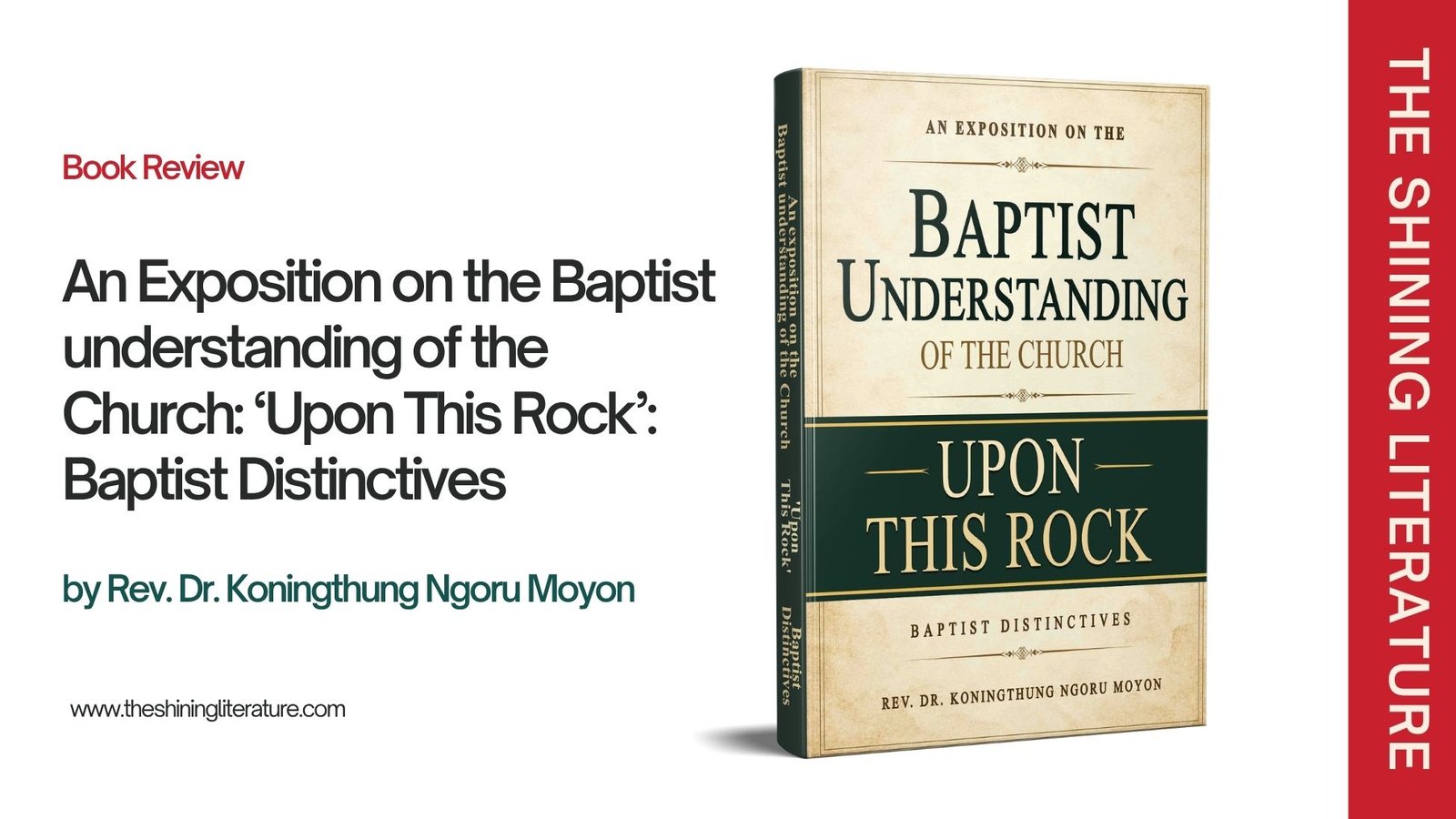
An Exposition on the Baptist Understanding of the Church: Exploring Baptist Distinctives and Biblical Foundations
The Baptist Church has a rich theological heritage rooted in biblical teachings, historical traditions, and distinctive principles of Christian faith. Understanding these foundations is essential for pastors, theological students, church leaders, and believers seeking a deeper appreciation of Baptist identity and ecclesiology.
An Exposition on the Baptist Understanding of the Church: Upon This Rock: Baptist Distinctives by Rev. Dr. Koningthung Ngoru Moyon offers a comprehensive examination of Baptist doctrines, church governance, and the biblical principles that have shaped Baptist theology across generations.
Through careful scriptural interpretation, historical research, and theological analysis, the author presents an insightful exploration of the beliefs that distinguish the Baptist tradition within Christianity.
Understanding the Biblical Foundations of the Baptist Church
The Baptist understanding of the Church is deeply connected to the authority of Scripture and the teachings of Jesus Christ. Baptist theology emphasizes the importance of establishing church practices, leadership structures, and spiritual responsibilities upon biblical principles.
This theological work explores how Scripture provides the foundation for understanding the nature, purpose, and responsibilities of the Christian Church.
It also examines the relationship between biblical doctrine and practical church administration, encouraging readers to recognize the importance of maintaining scriptural integrity in contemporary Christian ministry.
The Importance of Scripture in Baptist Theology
One of the central characteristics of Baptist belief is the authority of the Bible in matters of faith and practice.
The author discusses how biblical teachings influence church governance, Christian discipleship, worship, and the responsibilities of believers.
By examining historical Baptist interpretations alongside scriptural references, the book provides readers with a clearer understanding of how Baptist theology has developed while maintaining its commitment to biblical authority.
Exploring Baptist Distinctives and Theological Identity
Baptist distinctives represent the theological principles and practices that define Baptist identity within the broader Christian tradition.
The book examines several essential doctrines, including covenant theology, credobaptism, local church autonomy, Christian stewardship, and the responsibilities of church leadership.
These teachings provide a framework for understanding the spiritual and organizational characteristics of Baptist congregations.
Covenant Theology and Credobaptism
Covenant theology plays an important role in understanding the relationship between God, His people, and the Church.
The author explores historical Baptist perspectives on biblical covenants and their connection to the doctrine of believers’ baptism, commonly known as credobaptism.
This discussion helps readers understand why Baptists emphasize baptism upon a personal profession of faith and how this practice relates to their interpretation of Scripture.
Autonomy of the Local Baptist Church
Another significant Baptist distinctive is the autonomy of the local congregation.
The book examines the theological reasoning behind congregational independence and the responsibility of individual churches to govern their affairs according to biblical teachings.
It also highlights the importance of spiritual accountability, responsible leadership, and cooperation among believers in maintaining healthy church communities.
The Historical Development of Baptist Theology
Understanding Baptist beliefs requires an appreciation of the historical circumstances that shaped the tradition.
Throughout Christian history, theological debates and movements have influenced the development of Baptist doctrines and church practices.
Drawing upon historical Baptist sources and confessions, the author examines the theological arguments that contributed to Baptist identity.
Learning from Historic Baptist Confessions
Historic Baptist confessions provide valuable insights into the beliefs and convictions of earlier Baptist communities.
By engaging with these theological documents, readers can better understand how Baptist scholars and ministers explained biblical doctrines, church membership, baptism, and congregational governance.
This historical approach connects contemporary theological discussions with the enduring principles of the Baptist tradition.
Christian Leadership, Stewardship, and Church Governance
Effective Christian leadership requires more than administrative ability. It demands spiritual maturity, humility, accountability, and commitment to biblical teachings.
The book explores the responsibilities of pastors and church leaders in guiding congregations while preserving doctrinal integrity.
It also addresses Christian stewardship, missions, and the importance of serving others through faithful ministry.
Servant Leadership in Christian Ministry
Servant leadership remains an essential principle of biblical church administration.
Rather than emphasizing authority alone, the author highlights the importance of humility, service, spiritual responsibility, and unity among believers.
These principles encourage church leaders to develop congregations that reflect Christian values and maintain strong relationships within their communities.
Why This Book Is Important for Baptist Pastors and Theological Students
The study of Baptist ecclesiology remains relevant for individuals preparing for Christian ministry and those seeking deeper theological knowledge.
This work offers a structured examination of doctrinal foundations, historical interpretations, and practical applications of Baptist beliefs.
For theological students and seminary teachers, it provides material for academic discussion and biblical study.
For pastors and church leaders, it encourages reflection on church governance, spiritual responsibilities, and faithful Christian leadership.
Researchers and scholars may also appreciate its engagement with historical Baptist sources and theological interpretations.
The Relevance of Baptist Ecclesiology in Contemporary Christianity
Modern churches encounter challenges involving leadership, administration, doctrinal understanding, and changing social expectations.
A strong foundation in biblical ecclesiology can help Christian communities approach these challenges with clarity and spiritual responsibility.
The book encourages believers to revisit the theological principles that have historically shaped Baptist churches while considering their continued relevance in contemporary ministry.
Its emphasis on scriptural faithfulness, congregational unity, and responsible leadership makes it a meaningful resource for theological education and Christian reflection.
Conclusion: Rediscovering the Foundations of Baptist Faith
Rev. Dr. Koningthung Ngoru Moyon presents a thoughtful examination of Baptist theology, historical traditions, and biblical church principles.
By connecting doctrinal understanding with practical Christian ministry, the work encourages readers to appreciate the theological foundations that define Baptist identity.
Whether approached for academic research, pastoral preparation, seminary education, or personal spiritual enrichment, this publication offers an opportunity to explore the enduring significance of Baptist beliefs.
For anyone interested in Baptist doctrines, biblical ecclesiology, and Christian leadership, it serves as a valuable contribution to the study of the Church and its spiritual mission.