
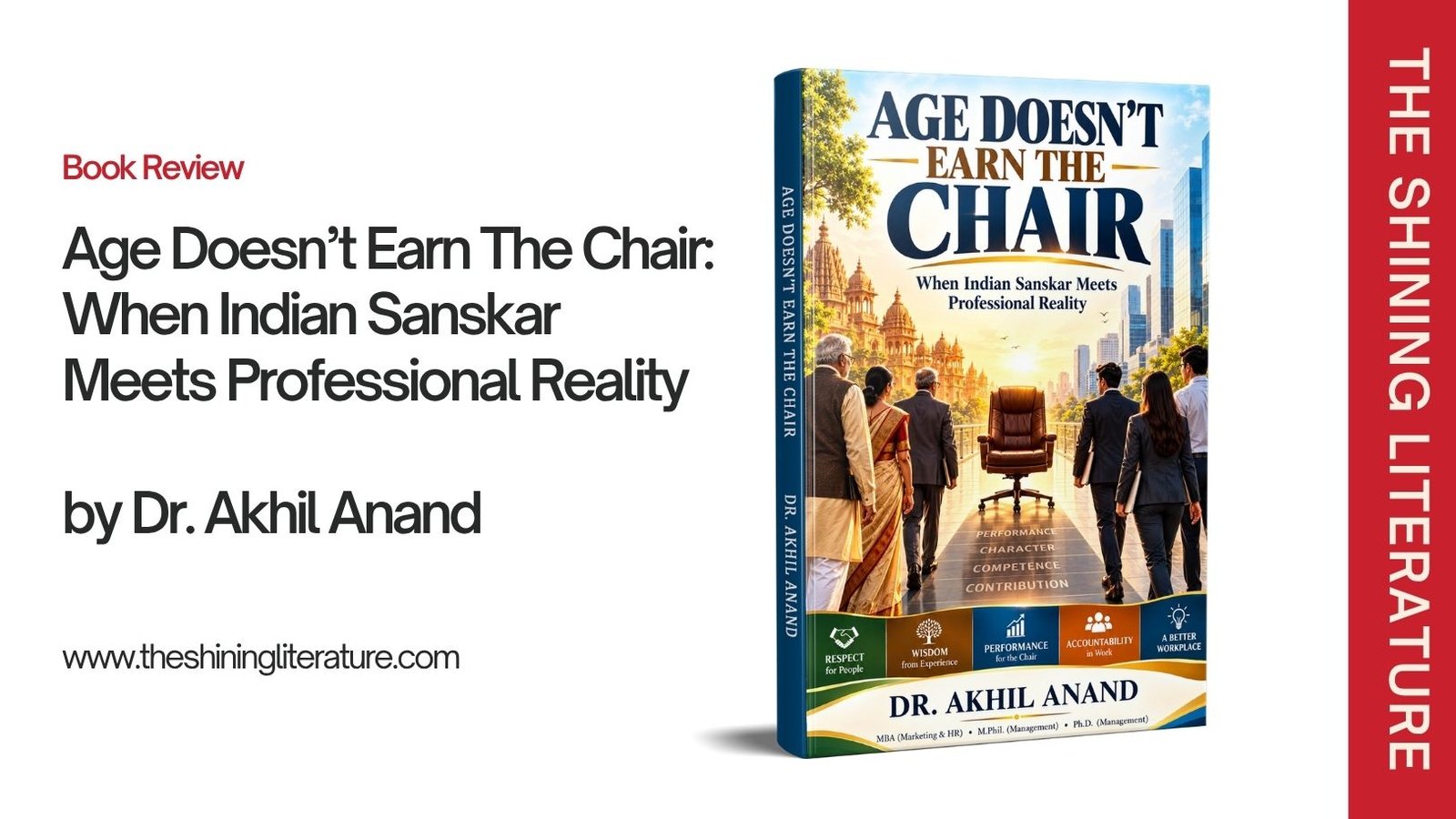
Age Doesn’t Earn The Chair by Dr. Akhil Anand: Rethinking Leadership, Respect and Indian Sanskar
In Indian society, age has traditionally been associated with wisdom, experience and authority. Respecting elders is deeply rooted in cultural values and family traditions. However, in today’s rapidly evolving professional environment, an important question arises: Should age alone determine leadership, authority and professional respect?
Age Doesn’t Earn The Chair: When Indian Sanskar Meets Professional Reality by Dr. Akhil Anand explores this question through the lens of Indian traditions, workplace ethics and modern leadership principles.
Now available on Amazon, Kindle and Google Play Books, this thought-provoking book encourages readers to reconsider the relationship between seniority, competence, responsibility and professional accountability.
About Age Doesn’t Earn The Chair by Dr. Akhil Anand
Age Doesn’t Earn The Chair: When Indian Sanskar Meets Professional Reality challenges the conventional belief that seniority automatically establishes professional authority.
Through relatable examples from corporate offices, educational institutions, hospitals and family businesses, Dr. Akhil Anand examines the challenges that arise when traditional expectations meet modern professional responsibilities.
The book highlights an essential distinction between respecting someone’s age and accepting their professional decisions without question.
Rather than dismissing cultural traditions, the author encourages readers to understand their deeper meaning and apply them thoughtfully in contemporary workplaces.
The Central Message of the Book
The book presents a powerful idea: Respect is universal, but leadership must be earned through competence, character, fairness and accountability.
It reminds readers that professional authority should not become a privilege granted solely because of age or seniority.
Indian Sanskar and Modern Professional Leadership
Indian sanskar places considerable importance on respecting elders, maintaining dignity and acknowledging experience.
These values have shaped generations of families, institutions and workplaces. However, professional environments also require transparency, responsibility and merit-based decision-making.
Dr. Akhil Anand explores how these principles can coexist without compromising either cultural identity or organisational effectiveness.
Lessons from Indian Scriptures and Traditions
One of the distinctive aspects of Age Doesn’t Earn The Chair is its connection with Indian philosophical and cultural traditions.
Drawing inspiration from the Bhagavad Gita, Mahabharata, Ramayana and Chanakya’s teachings, the book examines leadership, wisdom, duty and ethical responsibility.
These references provide a cultural foundation for understanding why true leadership requires more than experience or an official designation.
The book encourages readers to recognise that traditional wisdom can remain relevant while adapting to modern professional realities.
Age vs Competence: What Makes a Good Leader?
Experience can be valuable in decision-making, mentoring and organisational development. However, experience alone does not guarantee effective leadership.
A younger professional may possess specialised knowledge, innovative thinking and strong management abilities. Similarly, an experienced professional may contribute valuable judgment, institutional knowledge and perspective.
The challenge lies in recognising individual capabilities rather than relying exclusively on age-based assumptions.
Why Professional Accountability Matters
Accountability is essential for building trust within any organisation.
Effective leaders must demonstrate fairness, responsibility, integrity and a willingness to accept constructive feedback.
Age Doesn’t Earn The Chair encourages professionals to distinguish between respect for individuals and unquestioning acceptance of authority.
The book also highlights the importance of creating workplaces where employees can communicate openly without fear of disrespecting senior colleagues.
Understanding Generational Differences in the Workplace
Modern organisations frequently bring together employees from different generations, educational backgrounds and professional experiences.
These differences can create opportunities for collaboration, but they may also lead to misunderstandings regarding authority, communication and workplace expectations.
Dr. Akhil Anand explores these challenges through situations involving schools, colleges, corporate organisations, hospitals and family businesses.
Building Respect Across Generations
The book encourages professionals to develop environments where younger and older colleagues appreciate each other’s strengths.
Mutual respect, clear communication and fair decision-making can help organisations overcome unnecessary generational conflicts.
Instead of viewing age and competence as competing forces, the author presents an approach that values experience while recognising professional capability.
Why Should You Read Age Doesn’t Earn The Chair?
This book offers meaningful insights for readers interested in leadership, workplace culture, management and Indian social values.
Key reasons to read the book include:
- Rethink traditional leadership: Understand why authority should depend on competence and character rather than age alone.
- Explore Indian cultural values: Discover how Indian sanskar can coexist with modern workplace expectations.
- Understand generational challenges: Examine professional conflicts arising from differences in age, experience and responsibility.
- Develop ethical leadership: Reflect on fairness, accountability and professional integrity.
- Gain practical perspectives: Explore relatable examples from educational institutions, corporate offices and family businesses.
- Redefine workplace respect: Learn why respecting elders does not require unquestioning obedience.
About the Author: Dr. Akhil Anand
Dr. Akhil Anand is an academician, educational administrator and motivational speaker with more than sixteen years of professional experience in academics, student development and educational management.
He holds an MBA with dual specialisation in Marketing and Human Resource Management, an M.Phil. in Management and a Ph.D. in Management.
His professional experience includes teaching, training and placement, examinations and institutional leadership across schools, colleges and universities.
Academic and Professional Journey
Dr. Anand has served as Chief Executive Officer of P. L. Shiksha Niketan Senior Secondary School, Khagaria, Bihar.
He is also the Director of Dr. P. L. International School, Latani, Purvi Tundi, Dhanbad, Jharkhand.
His extensive involvement with teachers, students, parents and administrators has provided practical insights into educational leadership and institutional management.
Through his writing, he seeks to make complex subjects such as leadership, ethics, education and personality development accessible to everyday readers.
Age Doesn’t Earn The Chair Now Available on Amazon, Kindle and Google Play Books
Readers interested in Indian leadership philosophy, workplace ethics and professional development can now explore Age Doesn’t Earn The Chair: When Indian Sanskar Meets Professional Reality by Dr. Akhil Anand.
The book is now available on Amazon, Kindle and Google Play Books, making it accessible to readers who prefer paperback or digital reading formats.
Whether you are a manager, educator, entrepreneur, student or aspiring leader, this book offers an opportunity to reflect on the meaning of authority and respect.
Final Thoughts
Age Doesn’t Earn The Chair delivers a timely message for modern Indian society.
It does not reject tradition or diminish the importance of elders. Instead, it encourages a balanced understanding of cultural respect and professional responsibility.
Dr. Akhil Anand reminds readers that genuine leadership is demonstrated through actions, competence, fairness and accountability.
Ultimately, respect should be extended to everyone, while leadership must be earned through character and capability, never age alone.