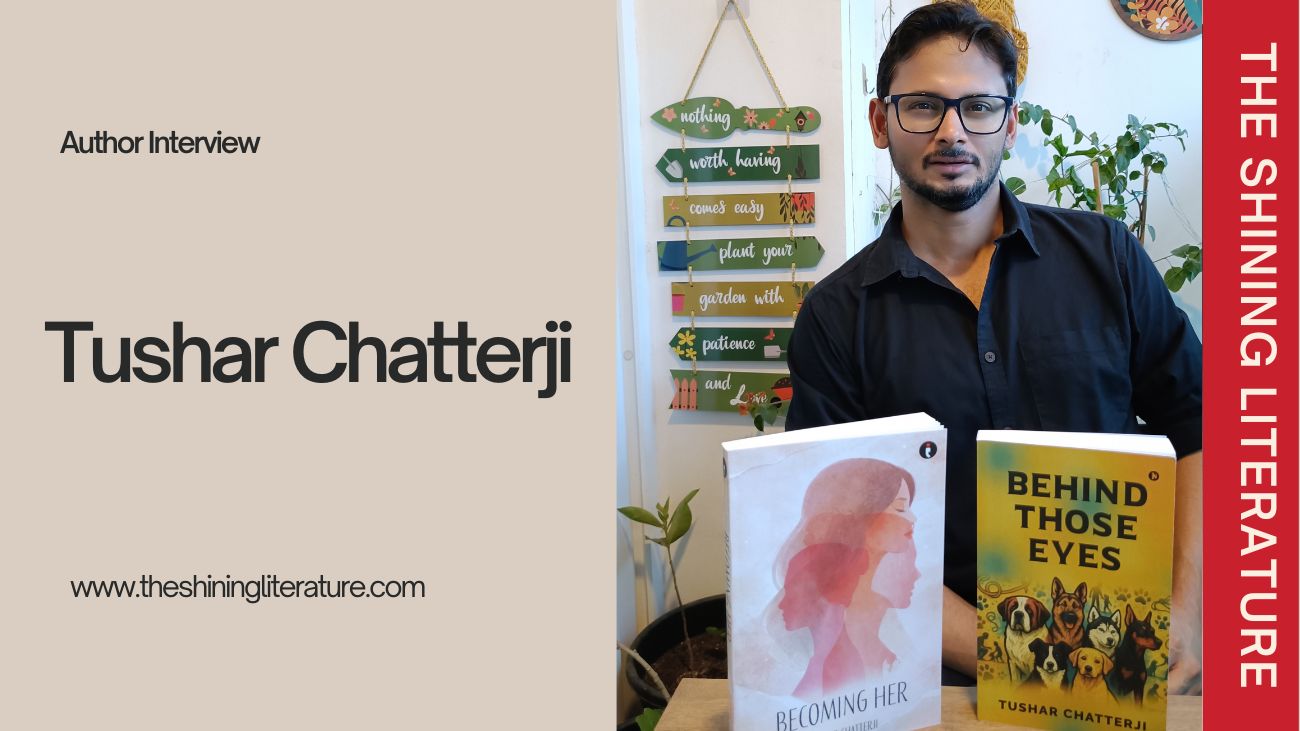
Congratulations on winning the Sahitya Sparsh Awards Season 4 for Becoming Her. How does this recognition make you feel?
Thank you so much. Winning the Sahitya Sparsh Award for Becoming Her is both deeply humbling and emotionally fulfilling.
This book was written with the hope of recognizing women whose courage is not always visible, celebrated, or even acknowledged. The women in these stories are not necessarily fighting dramatic public battles. Many of them are simply trying to reclaim their identities, make difficult choices, survive emotional losses, or find the courage to listen to themselves after years spent responding to others’ expectations.
For a book rooted in such intimate and often unspoken experiences to receive this recognition is profoundly reassuring. It tells me that these stories have reached readers not merely as fiction, but as reflections of lives they may have witnessed, lived, or carried within themselves.
I see this award as belonging to every woman who has ever questioned whether choosing herself makes her selfish, and to every reader who has recognized strength in someone the world may have overlooked.
It also motivates me to continue writing stories that create space for voices that deserve to be heard with greater empathy and attention.
What inspired you to write Becoming Her, and why did you choose to explore the theme of womanhood?
The inspiration for Becoming Her came from observing the many ways in which women are expected to inhabit predetermined roles.
A woman may be introduced as someone’s daughter, wife, mother, colleague, or caregiver long before she is recognized as an individual with her own dreams, fears, contradictions, and unfinished aspirations. Over time, these roles can become so deeply embedded that she may begin to forget the person she was before the world told her who she needed to be.
I wanted to explore womanhood not as a single, universal experience, but as a collection of individual journeys. The six women in the book come from different backgrounds and circumstances. They face different conflicts, but each arrives at a moment when she must decide whether to continue living according to inherited expectations or begin listening to her own voice.
The title Becoming Her reflects that process. It is not about transforming into someone entirely new. It is about returning to the self that may have been silenced, postponed, or buried beneath responsibility.
Although the book centers on women, its emotional questions are universal: How much of ourselves do we surrender to belong? When does compromise become self-erasure? And what does it take to reclaim a life that still feels ours authentically?
The book presents six unique stories. Is there one story or character that is especially close to your heart?
Each of the six women is close to me for a different reason because each represents a distinct emotional struggle and a different expression of courage.
Some confront expectations imposed by family or society. Others must recognize how deeply they have participated in their own silence. A few are compelled to leave behind relationships, identities, or certainties that once made them feel secure. Their journeys are not identical, and neither are their definitions of freedom.
It is difficult for me to choose one character because I see the collection as a conversation among all six women. One may possess the courage another is still searching for. One may make a choice another fears. Together, they demonstrate that there is no single correct way to become oneself.
The characters who remain closest to my heart, however, are often those whose transformation is the quietest. I am deeply drawn to women who do not declare their rebellion dramatically but begin changing their lives through small, deliberate decisions. Their courage may appear ordinary from the outside, but internally, it represents an enormous shift.
That kind of transformation feels especially true to me because real lives often change not through a single extraordinary moment but through a series of consistent, silent choices.
Your writing beautifully explores resilience, relationships and personal growth. What message do you hope readers take away from the book?
I hope readers recognize that resilience does not always look like strength in its most conventional form. Sometimes resilience is leaving. Sometimes it is staying, but no longer remaining silent. It can mean beginning again after loss, setting a boundary, asking for help, forgiving oneself, or accepting that a life built around pleasing others may no longer be sustainable.
The women in Becoming Her are not fearless. They hesitate, make mistakes, doubt themselves, and occasionally return to familiar patterns. Their growth is not linear because personal transformation rarely is. What makes them resilient is not that they never break, but that they gradually learn to rebuild themselves with greater honesty.
I also hope the book encourages readers to examine the relationships in their own lives. Love should not require the disappearance of the self. Compromise is necessary in any meaningful relationship, but it should not consistently require one person to make themselves smaller so that others remain comfortable.
The central message of the collection is that choosing oneself is not necessarily an act of rejection. Sometimes it is the first honest step towards living, loving, and relating to others without resentment or self-betrayal.
What kind of research or personal experiences helped shape the stories in Becoming Her?
The stories were shaped through a combination of observation, conversations, empathy, and reflection.
Over the years, I have encountered women across different generations, professions, and social circumstances. Many have spoken openly about ambition, marriage, motherhood, sacrifice, aging, financial independence, and the pressures of appearing emotionally composed. Others have communicated their experiences more indirectly through pauses, unfinished sentences, or the noticeable gap between what they wanted to say and what they felt they were permitted to say.
Those observations helped me understand that some of the most significant battles in a person’s life are invisible to everyone around them.
I was also conscious of the responsibility that comes with writing women-centric stories as a male author. I did not want to claim ownership of experiences I had not personally lived through. My role was to listen, observe, and approach each character with humility. I focused on creating emotionally truthful individuals rather than making broad statements on behalf of all women.
The research was therefore not limited to factual information. It involved understanding social conditioning, family structures, emotional labor, generational expectations, and the subtle ways in which women are often taught to prioritize harmony over self-expression.
Most importantly, I tried to give each character the dignity of complexity. None of them exists merely to represent an issue. They are individuals with flaws, contradictions, desires, and agency.
What was the most challenging part of writing this collection?
The greatest challenge was ensuring that the six stories felt emotionally connected without making the women or their experiences appear interchangeable.
Womanhood is not a single narrative. A decision that represents freedom for one woman may feel like a burden to another. Marriage, motherhood, ambition, independence, and family responsibility can carry entirely different meanings depending on a person’s circumstances.
I therefore had to resist offering easy conclusions or presenting one model of empowerment as universally correct. I wanted each woman’s choices to emerge organically from her life, personality, and emotional history.
Another challenge was writing painful experiences without reducing the characters to their suffering. Their wounds matter, but they are not the entirety of who they are. Each woman needed humor, desire, anger, tenderness, and contradiction. Even in moments of vulnerability, she had to retain her dignity and agency.
The writing also required emotional restraint. A writer can sometimes weaken a powerful moment by explaining too much. I had to trust silence, gestures, and small details to communicate what the characters could not always articulate themselves.
Ultimately, the challenge was to write with empathy without becoming sentimental, and with honesty without turning the stories into lectures.
How has the response from readers been since the book was published?
The response has been deeply encouraging and, at times, unexpectedly emotional.
Several readers have written to tell me that they recognized themselves, their mothers, friends, sisters, or colleagues in one or more of the characters. Some connected with a particular decision a character made, while others responded to the emotions the women had suppressed for years.
What has moved me most is hearing from readers who said the book prompted them to begin conversations they had been avoiding. A story cannot solve the complexities of someone’s life, but it can help a reader feel less isolated. It can offer language to an emotion they have struggled to name.
The book has also received recognition on literary platforms and in awards, helping its stories reach a wider audience. I am sincerely grateful for that visibility. However, the most meaningful responses remain the personal ones: the messages in which readers say, “I understood her,” or “I felt as though this story was speaking to me.”
Those reactions remind me why fiction matters. Readers may enter a book through someone else’s life, but they often leave with a deeper understanding of their own.
Are you currently working on a new book or any upcoming writing projects?
Yes, I am working on several new writing projects and ideas, each exploring human relationships through a distinctive setting and narrative lens. Besides curating an intriguing collection of stories, one of my major works in progress is a literary fiction novel set on the Konkan coast, exploring themes of silence, compromise, and unspoken resentments that shape and define human relationships.
Are you active on social media or other online platforms? How can readers connect with you and stay updated on your work?
Yes, I enjoy engaging with readers, fellow writers, and people who share a love for books and meaningful storytelling.
Readers can visit my official website at www.tusharchatterji.com to find information about my books, upcoming projects, awards, media features, events, and published work.
I am also active on LinkedIn, where I share updates about my author journey, literary events, and book festivals. Readers can also connect with me on Instagram at @tuchat_is_to_err_ji, where I share book-related updates, recognitions, reviews, cinema reviews, and moments from my writing journey.
I genuinely value reader feedback. Every thoughtful review or personal message offers me a new perspective on how a character or story has been interpreted.
Becoming Her is available to readers in both paperback and digital formats (https://amzn.in/d/054uoD44).
The paperback can be purchased through Amazon, while the digital edition is available onAmazon Kindle. This allows readers to choose the format that best suits their reading preferences.
What advice would you give to aspiring authors who want to write emotionally impactful stories?
Begin with emotional truth, not the desire to impress or overwhelm the reader.
A story becomes moving when its characters feel real. Readers do not connect with perfection; they connect with vulnerability, contradiction, and recognizable human behavior. Allow your characters to make mistakes, conceal things, act selfishly, change their minds, and struggle to understand themselves.
Observe the details of ordinary life. Emotional impact often comes from small moments: a plate of food left untouched, a call that is never returned, an old garment that still carries someone’s scent, or a person rehearsing a sentence they may never have the courage to speak.
Listen carefully to people, particularly to what they avoid saying. Silence can reveal as much as dialogue.
Aspiring writers should also resist the temptation to explain every emotion. Trust your characters, and trust your readers. Give them space to interpret what lies beneath the words.
Most importantly, write with empathy. Even when a character makes a choice you disagree with, try to understand the fear, longing, or history behind it. Emotionally impactful fiction does not judge people from a distance. It enters their lives and asks readers to see them more completely.
Thank you for taking the time to answer our questions. Is there anything you would like to say to your readers and everyone who has supported your writing journey?
I want to express my heartfelt gratitude to every reader who has opened Becoming Her and made space for its six women in their lives.
A book begins as a private act of imagination, but it becomes something larger when readers recognize themselves or someone they love within its pages. Every review, recommendation, message and conversation has helped these stories travel beyond what I could have achieved alone.
I am deeply grateful to the literary platforms, reviewers, booksellers, fellow authors, friends, and family members who have encouraged my writing journey. The recognition from the Sahitya Sparsh Awards is an honor I will always cherish, not only because it celebrates the book but also because it affirms the importance of stories centered on identity, resilience, and women reclaiming their voices.
To the women who inspired these stories, through their courage, vulnerability, choices, and silences: thank you.
To my readers, I hope the book reminds you that becoming yourself is not a destination reached once and permanently. It is a lifelong process of questioning, unlearning, choosing, and beginning again.
And to aspiring writers who are still waiting for the perfect moment to begin: start with the story that refuses to leave you. Write it honestly. Write it imperfectly. But give it the chance to exist.
Sometimes, the act of telling a story is where transformation begins.